


Table of Contents
- Why Wide-Width Shoes Matter for Children's Foot Development
- How to Measure Your Child's Foot Width at Home
- Signs Your Child Needs Wide-Fit Footwear
- Barefoot Baby Shoes for Wide Feet: A Healthier Approach
- Key Features to Look for in Wide-Fit Children's Shoes
- Wide-Fit Shoe Options for Every Season
- Expert Fitting and Long-Term Foot Health
- Conclusion
- Frequently Asked Questions
Last Updated: September 27, 2026
Why Wide-Width Shoes Matter for Children's Foot Development
Finding the best shoes for wide feet children is crucial for healthy development. Ill-fitting shoes compromise gait, arch development, and create pressure points that cause discomfort during critical growth years.
Children's feet develop through adolescence with soft, malleable growth plates. Proper footwear directly influences long-term foot health, posture, and joint alignment. Wide-width shoes prevent strain on the entire lower body.
Research from the American Academy of Pediatrics emphasizes that properly fitted footwear during early childhood supports natural gait development and reduces the risk of foot problems later in life. The challenge many parents face is identifying when their child actually needs wide-fit footwear and then finding options that deliver both comfort and healthy biomechanics.
This guide covers everything you need to know about selecting the best shoes for wide feet children, from measuring at home to understanding which features truly support healthy development.
How to Measure Your Child's Foot Width at Home
Knowing your child's actual foot width is essential. Many parents rely on shoe size alone, missing the width dimension. Home measurement takes minutes and provides precise shopping information.
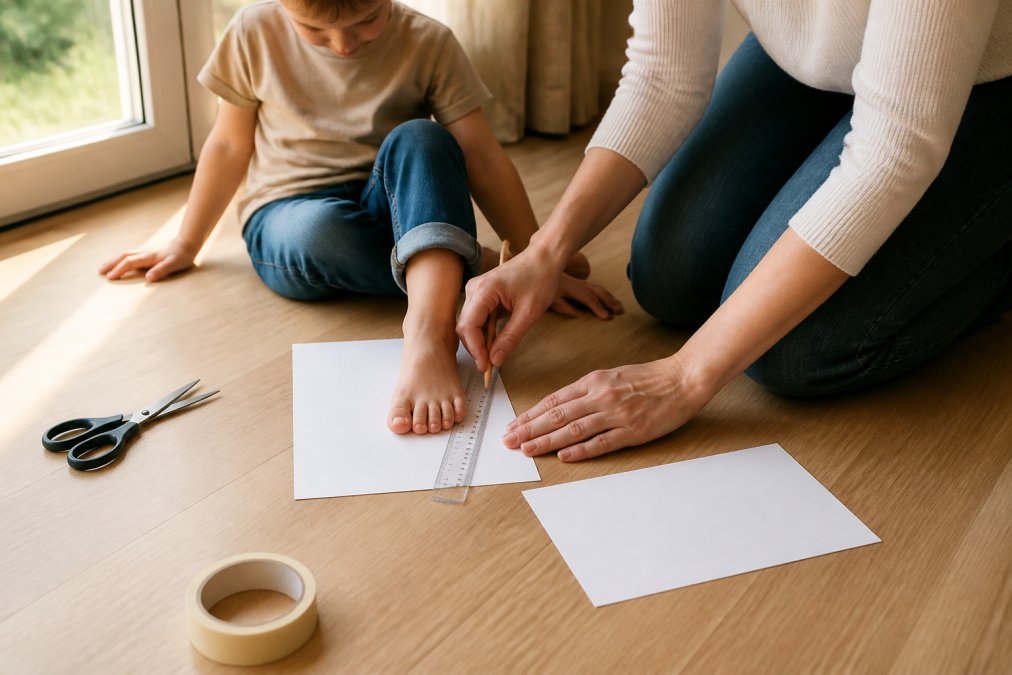
The basic measurement process:
Gather a ruler, white paper, and pen. Have your child stand barefoot with full weight distributed evenly, feet expand when weight-bearing. Trace around the foot and measure the widest point across the ball of the foot (just behind the toes).
Compare measurements against standard shoe width charts. If your child's foot width falls into the upper range for their age, wide-fit shoes are necessary. Shoe size alone doesn't indicate width, a size 28 child might have narrow, average, or wide feet.
Measure every 2-3 months during peak growth seasons (spring and fall). Width changes alongside length, so measure before each shoe purchase.
Signs Your Child Needs Wide-Fit Footwear
Several clear warning signs indicate standard-width shoes are causing problems. Recognizing them early prevents discomfort and supports healthier foot development.
Children may complain shoes feel tight across the top or instep despite proper length, remove shoes frequently, or develop red marks and indentations on the sides of their feet within an hour or two.
Watch for gait changes: toes pointed outward, limping, or walking on outer foot edges. These compensatory patterns develop when shoes pinch or restrict toe splay and can affect ankle stability and knee alignment.
Blistering or calluses on the sides of the foot signal pressure from narrow shoes. Extended wear can cause ingrown toenails or toe deformities.
Watch for behavioral cues: reluctance to walk, preference for going barefoot, or complaints of foot fatigue. These signals often appear before visible physical signs.
Barefoot Baby Shoes for Wide Feet: A Healthier Approach
Barefoot and minimalist footwear prioritize sensory feedback, natural gait, and unrestricted movement, particularly beneficial for children with wide feet who struggle with standard structured shoes.
Barefoot shoes feature zero-drop design, flexible soles, and wide toe boxes. The flexible sole maintains ground contact and sensory input, helping children develop stronger foot muscles and better proprioception.
For toddlers learning to walk, barefoot shoes like the Bundgaard Cover collection offer natural rubber construction that flexes with every step. These shoes provide protection from sharp objects and harsh surfaces while preserving the foot's ability to move naturally. The wide fit accommodates developing feet without compression, and the flexible sole allows children to feel ground texture, crucial for balance development during the first walking stages.
The Rainboots Cover (€45) exemplifies this philosophy with natural rubber construction, fixed heel cap for stability, and super-flexible sole. Available in Navy, Dark Rose, Rabbit Old Rose, and Blue, they're ideal for children with wide feet needing protection and unrestricted movement.

The BG401046_9441 Bundgaard Cover Navy Stripe (€47) adds snug fit for older toddlers while maintaining barefoot philosophy. Removable cotton insoles and lining provide breathability without sacrificing wide fit.
Key Features to Look for in Wide-Fit Children's Shoes
When evaluating shoes for wide feet children, certain features consistently separate functional footwear from poor choices. Understanding what to prioritize makes the selection process faster and more effective.
Wide toe box is non-negotiable. The toe box should allow natural toe splay without compression. A cramped toe box restricts blood flow and creates pressure points. Look for shoes with "wide toe box" or "generous toe room", "wide width" doesn't guarantee adequate toe space.
Flexible sole matters far more than many parents realize. Rigid soles restrict natural foot motion and force compensatory muscle use. Test flexibility by hand, you should bend the shoe easily. Barefoot shoes excel here; traditional structured shoes often fail.
Heel lockdown prevents foot sliding inside the shoe, especially for active children. A secure heel counter keeps the foot stable without tightness across the width. Look for firm heel cups or adjustable closures that tighten around the ankle without constricting the forefoot.
Breathable materials prevent moisture buildup and fungal growth. Natural leather or mesh uppers allow air circulation; avoid fully synthetic materials. MintMouse's Kapi Exclusive Booties | Fluffy Bunny (1028103) (€79) use 100% leather for winter, while (G3150290-6) Froddo Children's Sandals - BAREFOOT ELASTIC SANDAL (€78.50) feature water-repellent natural leather for summer.
Removable insoles allow customization of support as feet develop. Some children benefit from arch support; others develop better strength with minimal cushioning. The BG401057_3469 Thermo Rainboots Blush (€60) and BG401057_6465 Thermo Rainboots Rain Army (€60) include removable wool soles for seasonal adjustment.
Growth allowance of 10-12mm is the standard recommendation. This provides room for foot growth without allowing excessive sliding. Most quality children's shoes specify their recommended growth allowance. MintMouse's Rainboots Cover - Navy, Rainboots Cover - Rabbit Old Rose, Rainboots Cover - Dark Rose, Rainboots Cover - Blue, and BG401046_9441 Bundgaard Cover Navy Stripe consistently include this specification, ensuring proper fit as children grow.

| Feature | Why It Matters | What to Look For |
|---|---|---|
| Wide toe box | Prevents toe compression and pressure points | Room for natural toe splay |
| Flexible sole | Supports natural gait and foot development | Bends easily at ball of foot |
| Heel lockdown | Keeps foot stable without tightness | Firm heel cup or adjustable closure |
| Breathable materials | Prevents moisture and fungal growth | Natural leather or mesh uppers |
| Removable insoles | Allows customization and support adjustment | Easy removal and replacement |
| Specified growth allowance | Ensures proper fit during growth phases | 10-12mm recommended |
Wide-Fit Shoe Options for Every Season
Children's footwear needs shift with seasons, and finding wide-fit options for each season requires knowing what's available. MintMouse curates selections specifically designed for different weather while maintaining the wide-fit priority.
Summer and warm-weather options prioritize breathability and flexibility. The (G3150290-6) Froddo Children's Sandals - BAREFOOT ELASTIC SANDAL (€78.50) deliver exactly this combination. These sandals feature a wider toe box, zero heel drop, and an extra-flexible thermo rubber outsole. Universal fitting with adjustable velcro and elastic straps means they adapt to various foot widths. Natural leather construction with chrome-free lining keeps feet cool while supporting healthy development. The removable antibacterial microfiber insole adds hygiene without sacrificing the barefoot philosophy.
For water play and wet environments, the Rainboots Cover - Navy, Rainboots Cover - Rabbit Old Rose, Rainboots Cover - Dark Rose, and Rainboots Cover - Blue (€45 per pair) offer year-round versatility.
Expert Fitting and Long-Term Foot Health
Professional fitting services transform shoe shopping from guesswork into informed decision-making, ensuring shoes actually fit properly despite wide feet.
Conclusion
Finding the best shoes for wide feet children requires understanding your child's specific foot measurements, recognizing signs of ill-fitting footwear, and prioritizing features that support healthy development. Wide-fit options exist across all seasons, from barefoot sandals to insulated winter boots, but selecting them means moving beyond standard shoe stores and working with specialists who understand the unique needs of children with broader feet.
Frequently Asked Questions
What are the signs my child needs wide-fit shoes?
Watch for pinching around the instep, toe curling, or complaints of discomfort. If your child's foot appears wide relative to the shoe's toe box, or if they refuse to wear shoes, these are clear signs of ill-fitting shoes in toddlers. Redness or marks on the foot after removing shoes also indicate pressure points that shouldn't be there.
How often should I measure my child's feet for wide-fit shoes?
Children's feet grow rapidly, typically every 2-3 months in the first few years. Measure foot width every 2-3 months and length every 1-2 months. Growing room is essential; aim for 10-12 mm of space at the toe. Professional fitting services can track growth more precisely and catch sizing changes before discomfort develops.
Are barefoot baby shoes for wide feet better than structured shoes?
Barefoot shoes offer natural gait development and sensory feedback, making them ideal for first walkers with wide feet. They provide a wide toe box without restriction, allowing proper toe splay and arch development. However, for older children who run and play extensively, some structure and support become important. The best choice depends on your child's age, activity level, and foot development stage.
What materials should I look for in wide-fit children's shoes?
Natural leather and rubber are ideal for breathability and durability. Leather adapts to your child's foot shape over time, while flexible rubber soles allow natural movement and ground contact. Look for removable insoles to assess fit and ensure no harmful chemicals like PVC or PFAS are present. Materials should support healthy foot biomechanics without restricting toe movement.