


Table of Contents
- Physical Signs Toddler Shoes Do Not Fit
- Behavioral Changes That Signal Poor Fit
- How to Measure Toddler Feet at Home
- Signs of Foot Pain in Toddlers
- How Often to Refit Children Shoes
- Common Foot Problems from Poor-Fitting Shoes
- Why Proper Fit Matters for Foot Development
- Choosing Shoes That Support Healthy Growth
- Frequently Asked Questions
Last Updated: September 23, 2026
Physical Signs Toddler Shoes Do Not Fit
Your child's shoes should feel comfortable from day one. The most obvious indicators that toddler shoes do not fit appear on the skin itself.
Red marks on your child's feet signal shoes are too tight. These marks usually appear on the sides of the foot, around the heel, or across the top of the toes, developing within minutes and fading quickly after removal.
Blisters form when friction rubs the skin repeatedly, from shoes either too loose (causing sliding) or too tight (causing pressure). Calluses develop over weeks if pressure continues. Any visible redness, swelling, or raw patches requires immediate fit adjustment.
Red Marks, Blisters, and Skin Irritation
Inspect your child's feet every time you put shoes on. Look for red pressure marks that don't fade within 30 minutes, fluid-filled blisters, peeling or cracked skin, white or pale toe areas (sign of cut-off circulation), and swelling that appears only when wearing shoes. These signs mean the shoe is damaging your child's skin and can lead to infection, especially in active toddlers.
Heel Slippage and Toe Room Issues
Heel slippage happens when shoes are too loose, causing the heel to slide with each step and creating friction that causes blisters on the back of the heel and ball of the foot.
Watch for toes pressing against the front of the shoe, heel lifting when walking, bunching of fabric at the heel, or visible gaps between shoe and foot.
The thumb-width rule checks toe room: place your child's shoe on a flat surface and slip your thumb between the longest toe and the end of the shoe. Your thumb should fit comfortably with slight pressure. If your thumb doesn't fit, the shoe is too small; if there's extra space, it may be too large.
Behavioral Changes That Signal Poor Fit
Your child's behavior often reveals fit problems better than visual inspection, since toddlers can't always explain foot pain.
Watch for refusing to wear shoes, kicking them off, limping, becoming fussy shortly after putting them on, resting frequently, complaining about foot pain, or pulling at shoes and socks.
A child who walks normally at home but limps when wearing shoes has a fit problem, the shoe is either pressing on a sensitive area or moving too much with each step.
If your toddler cries when you put shoes on, the shoe may hurt or they remember previous discomfort. Don't force shoes that cause distress, as this creates negative associations with footwear that can last for years.
Watch how your child moves in new shoes. Confident walking suggests proper fit; cautious, tentative steps suggest discomfort.
How to Measure Toddler Feet at Home
Accurate measurement is the foundation of proper fit. Most parents guess at shoe size based on previous purchases, but this fails because toddler feet grow unpredictably.
Measure your child's feet every 2-3 months during the growth years. Growth spurts happen quickly, a shoe that fit perfectly in spring might be painfully tight by summer.
The Thumb-Width Rule for Sizing
The thumb-width rule is the simplest sizing method for quick checks at home or in stores. Have your child stand barefoot on a flat surface, place their shoe next to their foot, and slip your thumb between the longest toe and the end of the shoe. Your thumb should fit snugly with gentle pressure and move slightly side to side. If your thumb doesn't fit, the shoe is too small; if there's more than a thumb's width of space, it's too large.
This rule accounts for growth room, your child needs space to wiggle toes and flex their foot, but not extra room to kick around inside the shoe.
Using a Measuring Tape Accurately
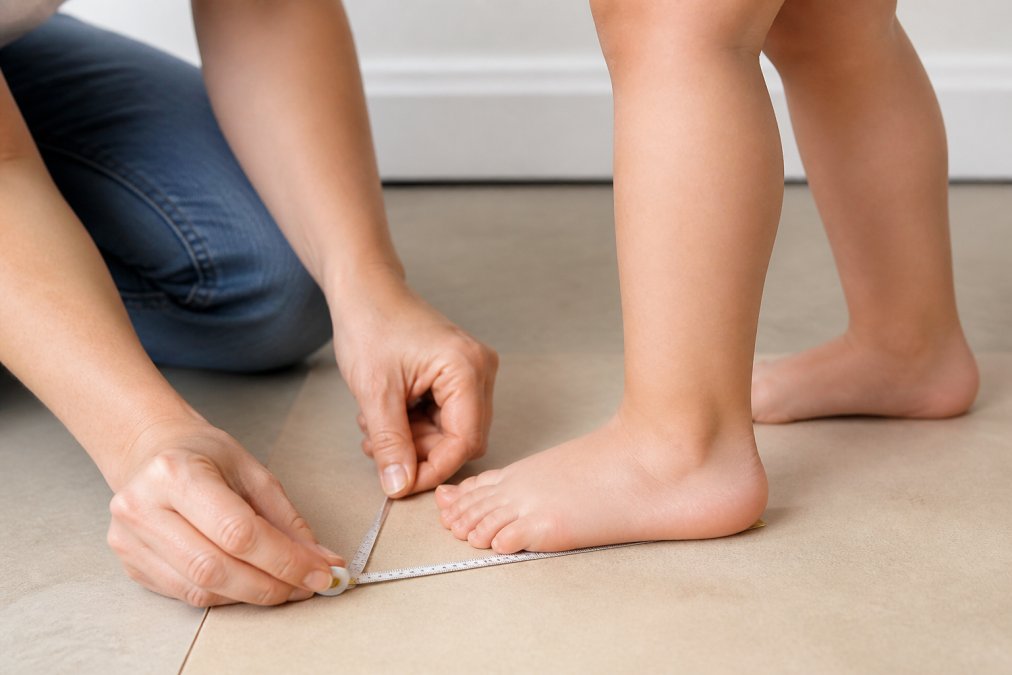
A measuring tape gives precise numbers for serious fit concerns. Have your child stand barefoot on a flat surface, place the tape at the heel, extend it to the longest toe, and write the measurement in centimeters. Measure both feet (they're often different sizes) while standing, not sitting. Compare measurements to the shoe size chart. The Emel Sport line provides exact measurements for each size, making it simple to match your child's foot to the right shoe.
Standing measurement matters because feet spread under body weight. A sitting measurement can be up to 1 cm shorter, changing which shoe size fits properly.
Measure your child's feet in the afternoon or evening, when feet are at their largest after a day of activity, ensuring shoes won't become too tight.
Signs of Foot Pain in Toddlers
Toddlers show foot pain through behavior and physical signs rather than verbal explanation. Watch for wincing when certain foot parts touch the ground, refusing to walk after short periods, pointing to or touching their feet, crying when shoes go on, walking on tiptoes, or asking to sit down or be carried shortly after shoes go on.
Ingrown toenails develop from shoes too tight across the toe box, causing pain and swelling. This requires professional attention and proper-fitting shoes to prevent.
Pressure points develop where shoes rub repeatedly, on the heel, outside of the little toe, or top of the foot where laces are tight, causing blisters and calluses that take weeks to heal.
Some toddlers develop arch pain from shoes with poor arch support, complaining about tired feet or refusing to walk long distances. Proper arch support helps young feet develop correctly and prevents pain during active play.
How Often to Refit Children Shoes
Toddler feet grow constantly. A shoe that fit perfectly at purchase can become too small within weeks. This is why regular refitting matters more for young children than for adults.
Most toddlers need new shoes every 2-3 months during the first three years of life. Growth happens in spurts, your child might wear the same size for two months, then grow a full size in one month.
Check shoe fit monthly using the thumb-width rule to verify adequate space. Preventive checking catches fit problems before they damage developing feet.
Tracking Growth Spurts and Seasonal Changes
Growth spurts are unpredictable, and seasonal changes affect foot growth. Keep a simple record of measurement dates, foot length in centimeters, shoe sizes purchased, and fit concerns. This helps you spot growth patterns and adjust refitting frequency accordingly. Consistent tracking of these physical changes provides a reliable baseline that simplifies the process of selecting appropriate toddler clothing sizes as your child continues to develop.
Seasonal transitions are critical times to refit. Before starting school or moving into a new season, measure your child's feet to ensure proper support during active play.
Common Foot Problems from Poor-Fitting Shoes
Shoes that don't fit properly can cause lasting problems, developing quickly or over weeks of wear.
Ingrown toenails develop when shoes are too tight across the toe box, causing pain, redness, and swelling. Prevention is far easier than professional treatment.
Bunions form when pressure pushes the big toe inward over time.
Why Proper Fit Matters for Foot Development
Your child's feet are still developing. Bones are soft and malleable. Muscles are still strengthening. The choices you make about footwear now affect how their feet develop for life.
Choosing Shoes That Support Healthy Growth
Quality matters when choosing children's shoes. Quality matters when choosing children's shoes. The Emel Sport line offers lightweight construction with proper cushioning and helps reduce stress on the foot with every step, designed specifically for active children.
Look for these features when selecting shoes:
- Breathable materials that allow air circulation
- Flexible soles that bend at the ball of the foot
- Proper arch support for developing feet
- Adjustable closures (velcro or laces) for secure fit
- Heel counters that provide stability
- Toe boxes with adequate room for toe development
Frequently Asked Questions
How do I know if toddler shoes are too small?
Check for red marks, blisters, or calluses on your child's feet after wearing the shoes. If your child's toes are cramped in the toe box or there's no thumb-width space between the longest toe and the shoe's end, they're too small. Watch for complaints of foot pain, increased fussiness during walks, or reluctance to wear the shoes. Measure your toddler's feet regularly since they grow quickly, every 2-3 months is recommended during early childhood.
What should I do if there's heel slippage in toddler shoes?
Minor heel slippage can sometimes be adjusted with thicker socks or heel grips, but persistent slipping indicates the shoe is too large or the heel counter doesn't match your child's foot shape. A proper fit should have minimal heel movement, no more than a quarter-inch when walking. If adjustment doesn't help, the shoes likely need resizing. Different brands fit differently, so trying shoes on or using a fitting service helps identify the right size across various styles.
How often should I refit my child's shoes as they grow?
Measure your toddler's feet regularly, as they grow quickly. Many parents find seasonal refitting helpful, checking before autumn and spring when activity levels change. Growth spurts can add a full shoe size in weeks, so watch for behavioral signs like increased fussiness, foot complaints, or reluctance to walk. An expert fitting service can track growth patterns and help you stay ahead of outgrowing shoes.
Can poor-fitting shoes cause long-term foot problems in toddlers?
Yes. Shoes that don't fit properly can contribute to ingrown toenails, bunions, calluses, and improper gait development. During toddlerhood, foot bones are still developing and are highly flexible, they adapt to whatever pressure or constraint the shoe creates. Chronic pressure from tight shoes or lack of arch support can affect walking patterns and foot alignment. Conversely, shoes with proper toe room, flexibility, and breathability support healthy arch development and natural gait, protecting your child's long-term foot health.