


Table of Contents
- Why Growing Feet Need Supportive Shoes (Not Stiff Ones)
- What to Look for in Barefoot Baby Shoes
- Signs of Ill-Fitting Shoes in Toddlers
- How to Measure Your Child's Foot Size at Home
- Supportive Shoes for Children: Key Features That Matter
- Hand-Me-Downs, Toxicity, and Budget: What Most Guides Skip
- Conclusion: Fitting Support to Your Child's Stage
- Frequently Asked Questions
Last Updated: September 11, 2026
Why Growing Feet Need Supportive Shoes (Not Stiff Ones)
Supportive shoes for children growing feet work differently than most parents assume. The goal isn't rigidity or ankle lock-down; it's allowing natural movement while protecting a foot that is still forming cartilage, building muscle, and developing its arch. Parents often arrive asking for "strong" shoes, and leave understanding that flexibility matters more.
A child's foot contains soft cartilage that gradually ossifies over the first years of life (peer-reviewed research). Padding it in a stiff, heavy shoe restricts the small muscles that build the arch and limits the sensory feedback the brain uses to refine balance. The American Academy of Pediatrics guidance on footwear notes that soft, flexible soles better support early walking than rigid alternatives.
That doesn't mean barefoot everywhere. It means choosing shoes with three qualities: a flexible sole that bends with the foot, a wide toe box that lets toes splay, and a secure fastening that holds the heel without squeezing.
What to Look for in Barefoot Baby Shoes
Barefoot baby shoes prioritize natural foot shape over cushioning. When evaluating what to look for in barefoot baby shoes, check four things: sole flexibility, toe box width, heel stability, and breathable materials.
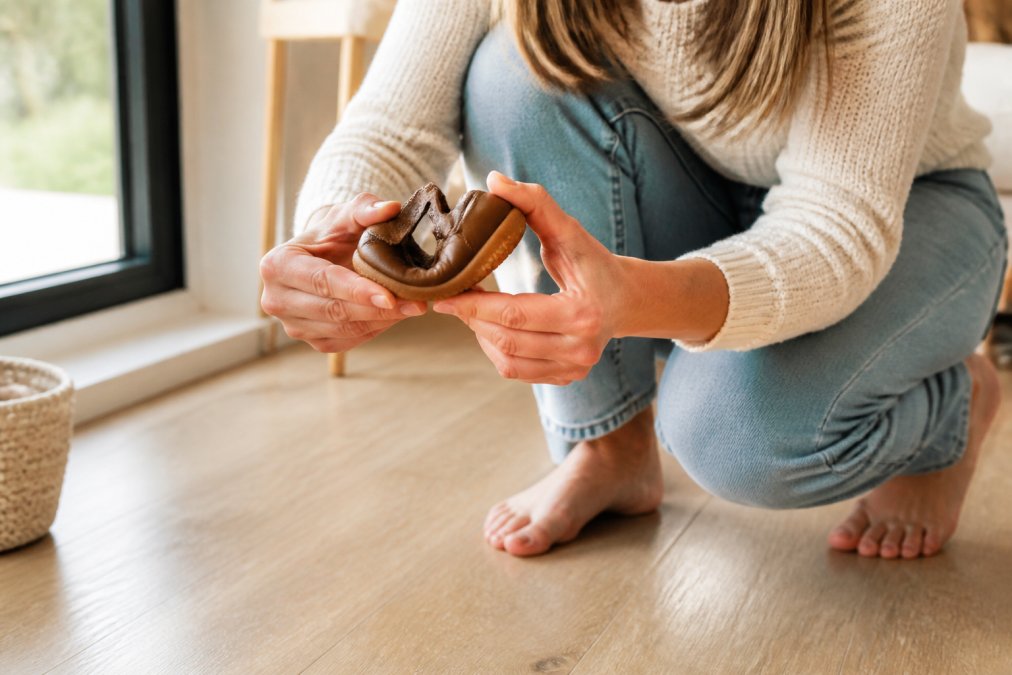
- Flexible sole: It should fold in half with light finger pressure and twist easily.
- Wide toe box: Toes need room to spread. A narrow, pointed shape compresses them.
- Low or zero heel drop: A flat shoe keeps the foot level and stable.
- Breathable upper: Leather and textile linings let air circulate and reduce moisture.
The Froddo Barefoot Tex Autumn ankle boot, for example, combines a wider toe box, zero heel drop, and an extra-flexible Lifolit® outsole in a waterproof build. That's the combination worth looking for: soft where it should bend, structured where it should hold.

Signs of Ill-Fitting Shoes in Toddlers
Recognizing the signs of ill-fitting shoes in toddlers early prevents long-term problems. Watch for these signals:
- Red marks, blisters, or calluses on the toes or heels after wearing
- Your child trips more often or walks awkwardly
- They resist putting the shoes on or pull them off constantly
- Toes curl or the foot slides forward when walking
- You can't fit a thumb's width between the longest toe and the shoe's end
A common mistake is sizing up "to grow into." A shoe that's too large causes the foot to slide, which forces toes to grip and can affect gait development. The fit should be snug at the heel and roomy at the front, nothing more.
How to Measure Your Child's Foot Size at Home
Measuring a child's foot at home takes about five minutes and gives you a reliable starting point. Do it in the afternoon, when feet are slightly larger, and measure both feet, since one is often bigger.
- Place a sheet of paper against a wall on a hard floor.
- Have your child stand with their heel touching the wall.
- Mark the tip of the longest toe with a pencil.
- Measure the distance from the wall edge to the mark in centimetres.
- Add 0.5 to 1 cm of growing room, then repeat for the other foot.
- Match the larger measurement to the brand's size chart.
Measure every six to eight weeks (healthychildren.org). Young children's feet grow in spurts, and a shoe that fit last season may already be tight. This is where an in-person fitting service earns its keep: trained hands catch what a tape measure alone misses.
Supportive Shoes for Children: Key Features That Matter
The features that make shoes supportive for children come down to a short, testable list. But understanding why each feature matters, and how it affects gait and posture, helps you evaluate shoes beyond a quick squeeze. Compare options against these criteria before buying. elastic shoelaces for kids.
| Feature | What to Check | Why It Matters |
|---|---|---|
| Sole flexibility | Bends in half at the ball of the foot, twists easily | Supports natural gait development by allowing the foot to roll through each step; a stiff sole forces the foot to work against the shoe, which can alter posture over time. |
| Toe box width | Toes splay flat, no pinching when standing | Aids balance and coordination: toes act as stabilizers, and compressing them reduces the foot's ability to sense the ground and adjust. |
| Heel counter | Firm, holds heel in place without squeezing | Prevents sliding and instability; a stable heel keeps the ankle aligned, which supports efficient gait and reduces fatigue. |
| Fastening | Laces or double fastener (e.g., hook-and-loop) | Adjustable fit for narrow or wide feet; a secure closure prevents the foot from sliding forward, which can cause toe clawing and tripping. |
| Materials | Leather, breathable textile lining | Reduces moisture and odour; breathable materials help maintain a healthy foot environment and prevent skin irritation that can affect gait. |
| Insole | Thin, removable, not too soft | Preserves stability and sensory feedback; overly cushioned insoles can dull proprioception, making it harder for a child to sense the ground. |
A hardened heel counter paired with a flexible forefoot is the balance most parents miss. The heel needs structure; the front needs freedom. The Emel lace-up trainers illustrate this well: a very flexible rubber outsole, a hardened heel counter, and laces that adapt to the foot without restricting movement. For wide feet, laces and double fasteners adjust far better than slip-ons, which is why they're worth prioritizing.

How to test in-store: Hold the shoe by the heel and press the toe area against a hard surface, it should bend easily where the toes flex. Twist the shoe lengthwise; it should have some give but not fold like a sock. Check the heel counter by squeezing it between your thumb and fingers, it should feel firm but not rock-hard. Finally, have your child wear the shoes and walk a few steps; watch for heel slippage or toe cramping.
Hand-Me-Downs, Toxicity, and Budget: What Most Guides Skip
Three topics rarely make it into children's shoe guides: hand-me-down safety, material toxicity, and whether paying more actually lasts longer. These are the questions parents ask us most often, and the ones that can make or break a child's foot health.
Hand-me-downs. Shoes mould to the first wearer's foot. The insole and midsole compress in a pattern unique to that child's gait, weight, and foot shape. Passing them down means the second child inherits someone else's wear pattern, which can affect foot alignment and comfort. A second child wearing a sibling's shoes may develop calluses or blisters in spots that don't match their own foot shape. Slippers and socks are fine to reuse; structured shoes generally aren't. If you must reuse, limit it to shoes with removable insoles that can be replaced, and inspect the outsole for uneven wear, if one side is worn down more than the other, the shoe is no longer neutral.
Material toxicity. Children sweat heavily in shoes and sometimes chew on them, so what's in the materials matters. Leather and textile uppers that meet EU chemical safety standards (look for OEKO-TEX® or similar certifications) are the safer choice. Ask what the lining and insole are made from, some synthetic linings can contain phthalates or heavy metals. A simple rule: if the shoe has a strong chemical smell out of the box, let it air out for a few days before wearing, and consider returning it if the smell persists. For children with sensory sensitivities, seamless toe boxes and soft, undyed leather linings can reduce irritation.
Budget versus longevity. Handmade leather shoes with removable insoles and durable construction tend to hold up better through daily wear. When budgeting, prioritize fit and flexibility over brand names; a mid-range shoe that meets all the criteria above will serve your child better than a premium shoe that's too stiff or narrow.
Conclusion: Fitting Support to Your Child's Stage
Getting children's footwear right is a moving target. Feet grow in spurts, needs shift from first steps to running, and no single pair fits every stage. The work is in matching support to where your child is right now, then refitting as they grow.
Our expert fitting service measures the actual foot, not just the size label, and our curated range of handmade leather shoes runs from size 18 to 42. Every pair is chosen for flexibility, breathable materials, and durable construction that supports healthy foot development.
Get started with MintMouse and give your child shoes that fit today's foot and support tomorrow's steps.
Frequently Asked Questions
What shoes are best for growing feet?
Look for flexible soles that bend with the foot, a wide toe box that lets toes splay, breathable leather or textile uppers, and a firm heel counter for stability. Avoid rigid soles and narrow toe boxes. Barefoot-inspired designs like Froddo barefoot boots or handmade Emel first shoes meet these criteria while offering durable construction for daily wear.
Do toddlers really need arch support?
Most toddlers have flat feet naturally because their arches develop between ages 2 and 6. Supportive shoes for children should not force an arch; instead, they should allow natural foot movement. A flat, flexible footbed supports healthy development better than rigid arch support, which can interfere with muscle strengthening and gait development.
How often should you replace children's shoes?
Children's feet grow in spurts, often every 2 to 4 months for toddlers and every 4 to 6 months for older kids. Check fit monthly by pressing the toe area: you should feel about 1 cm of space beyond the longest toe. Replace shoes when that space disappears or when the sole shows uneven wear, which can affect foot alignment.
Can my child wear hand-me-down shoes?
Hand-me-downs are risky because the previous wearer's gait patterns mold the sole and footbed, which can misalign a new wearer's feet. If you do pass shoes down, limit them to indoor or occasional use and inspect for worn heel counters or compressed cushioning. For daily wear, new supportive shoes are safer for healthy foot development.