


Table of Contents
The Benefits of Leather Shoes for Toddlers and Older Kids
The Importance of Proper Shoe Fitting for Kids
- Table of Contents
- What Makes Handmade Leather Shoes Different?
- The Benefits of Leather Shoes for Toddlers and Older Kids
- The Importance of Proper Shoe Fitting for Kids
- Leather Shoe Maintenance Tips to Protect Your Investment
- The Verdict: Are Handmade Leather Shoes Worth It?
- Frequently Asked Questions
Last Updated: September 9, 2026
What Makes Handmade Leather Shoes Different?
Whether handmade leather shoes are worth the investment comes down to construction, materials, and fit. Handmade leather shoes are footwear constructed largely by hand, using full-grain leather uppers, traditional welt construction, and saddle stitching that prioritize longevity over production speed. This guide explores what separates these shoes from mass-produced options, especially for growing feet.
Most parents first notice the materials. Full-grain leather develops a rich patina, molds to the foot, and breathes far better than synthetics. A Goodyear welt or hand-welted sole allows the shoe to be repaired rather than discarded, a feature mass-produced footwear rarely offers.
The real distinction, however, is the last, the three-dimensional mold around which the shoe is built. Handmade shoes often use a last designed to mirror the natural anatomy of a child's foot, offering room for toes to splay and proper arch support.
The Benefits of Leather Shoes for Toddlers and Older Kids
Children's feet are soft, pliable structures still forming their bones (peer-reviewed research). The benefits of leather shoes for toddlers begin with breathability, as natural leather regulates temperature and wicks moisture, reducing fungal issues. Flexible soles allow natural foot movement, supporting muscle development and balance during those crucial first steps.
For older children, the advantages shift toward support and durability. A well-constructed leather shoe holds its shape, providing consistent arch support as kids run, jump, and climb.
Children are hard on footwear, but a quality pair of handmade leather shoes often outlasts two or three pairs of cheaper alternatives.
The Importance of Proper Shoe Fitting for Kids
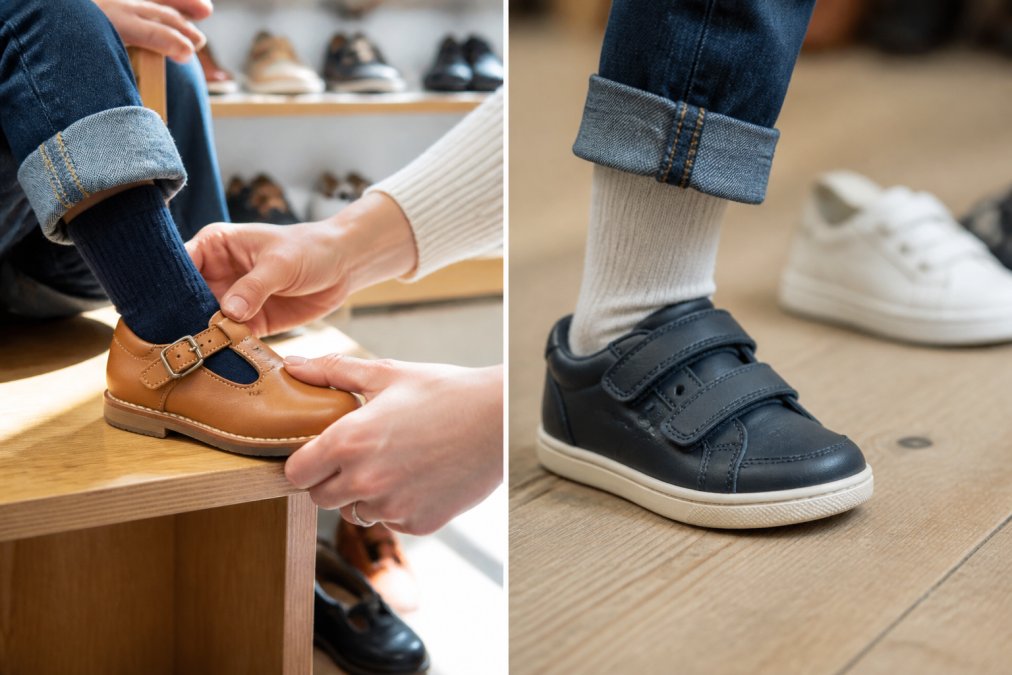
A beautiful shoe that does not fit correctly can cause more harm than a practical one that does. The importance of proper shoe fitting for kids cannot be overstated, as ill-fitting shoes are a leading contributor to foot problems like bunions, ingrown toenails, and poor gait.
A proper fitting goes beyond checking length. It involves assessing width, foot volume, arch height, and the way the child walks. Feet can grow a half-size or more in just a few months, so regular measurement is essential.
Given how quickly children outgrow shoes, some parents wonder if the expense is justified. Frequent refitting is a reality, but a shoe that supports development correctly during these formative years is an investment in long-term foot health.
Leather Shoe Maintenance Tips to Protect Your Investment
Handmade leather shoes are an investment that requires care to protect. Leather shoe maintenance tips are straightforward, but consistency is key. The primary rule is to let shoes dry naturally after wear, away from direct heat sources.
Regular cleaning and conditioning are essential. Use a soft brush to remove dirt, then apply a high-quality leather conditioner every few weeks to keep the leather supple. This prevents dryness and cracking, the most common cause of premature failure.
Proper storage also extends the shoe's life. Shoe trees maintain shape and absorb moisture. Rotating between two pairs allows each to fully dry and recover, doubling their lifespan.
The Verdict: Are Handmade Leather Shoes Worth It?
So, are handmade leather shoes worth it? For parents prioritizing their child's foot health and long-term value, the answer is a clear yes. The combination of superior materials, anatomical fit, and repairability offers benefits mass-produced shoes cannot match.
The decision ultimately hinges on what you value. If you view shoes as disposable items, the investment may seem excessive. But if you see footwear as a foundational element of your child's physical development, the value becomes clear. For those seeking expert guidance and a curated selection of healthy, handmade footwear, MintMouse offers a comprehensive fitting service and a range of sizes from 18 to 42.
Frequently Asked Questions
How long do handmade leather shoes last?
Unlike mass-produced options, handmade leather shoes are built to be repaired, not replaced. With proper care and regular resoling, a high-quality pair can last for several years or even be passed down to a younger sibling. The full-grain leather upper develops a beautiful patina and becomes more supple over time, while the sturdy construction method allows a cobbler to replace the outsole when it wears thin, extending the shoe's life significantly.
Are handmade leather shoes better for foot development?
Handmade shoes often support natural foot development better than stiff, mass-produced alternatives. They typically use flexible, full-grain leather that molds to a child's foot and allows for natural movement. The importance of proper shoe fitting for kids cannot be overstated; a shoe that is shaped on a last designed for a child's anatomy, combined with a correct fit, provides the ideal environment for healthy growth. This helps prevent issues like blisters and ingrown toenails.
Do handmade leather shoes require special maintenance?
They require simple, regular care rather than special treatment. To keep the leather supple and water-resistant, apply a high-quality leather conditioner or balm every few weeks. If the shoes get muddy, let the mud dry and brush it off with a soft brush instead of washing with water. Allowing them to air dry naturally away from direct heat is also key. These leather shoe maintenance tips will keep them looking beautiful for years.
Why are handmade leather shoes so much more expensive than regular shoes?
The higher price reflects the cost of materials and labor. Handmade shoes use full-grain leather, which is the strongest and most durable part of the hide, and are assembled by skilled artisans rather than machines. This construction method, which is often resoleable, means you are paying for longevity and repairability. When you calculate the cost-per-wear over a multi-year lifespan, they often prove more economical than replacing cheap shoes every few months.