


Table of Contents
- Why Proper Maintenance Matters for Handmade Leather Shoes
- Essential Tools and Leather Shoe Cleaning Kit Essentials
- Your Daily and Weekly Maintenance Routine
- Cleaning Leather Shoes and Removing Salt Stains
- How to Remove Scuffs from Leather Shoes
- Conditioning and Moisturizing Your Leather
- How Often to Polish Leather Shoes and Buffing Techniques
- Storage, Shoe Trees, and Seasonal Care
- Frequently Asked Questions
Last Updated: October 2, 2026
Why Proper Maintenance Matters for Handmade Leather Shoes
To maintain handmade leather shoes as an investment in quality and durability requires proper care. The difference between shoes that last five years and shoes that last fifteen comes down to proper maintenance.
Most people neglect leather shoes, tossing them in a closet and hoping they hold up. Neglected leather cracks, stiffens, and deteriorates fast, costing money in the long run.
Families often choose handmade leather shoes for their children because the quality lasts through multiple children, but only with proper maintenance. A simple routine protects your investment and keeps the leather supple.
Proper maintenance protects the leather from water, salt, and dirt damage; keeps it soft and flexible; extends the shoe's life by years; and maintains appearance and comfort.
The good news? You don't need much. A few tools and a simple routine are all it takes.
Essential Tools and Leather Shoe Cleaning Kit Essentials
Five core items form the foundation of any leather shoe care routine.
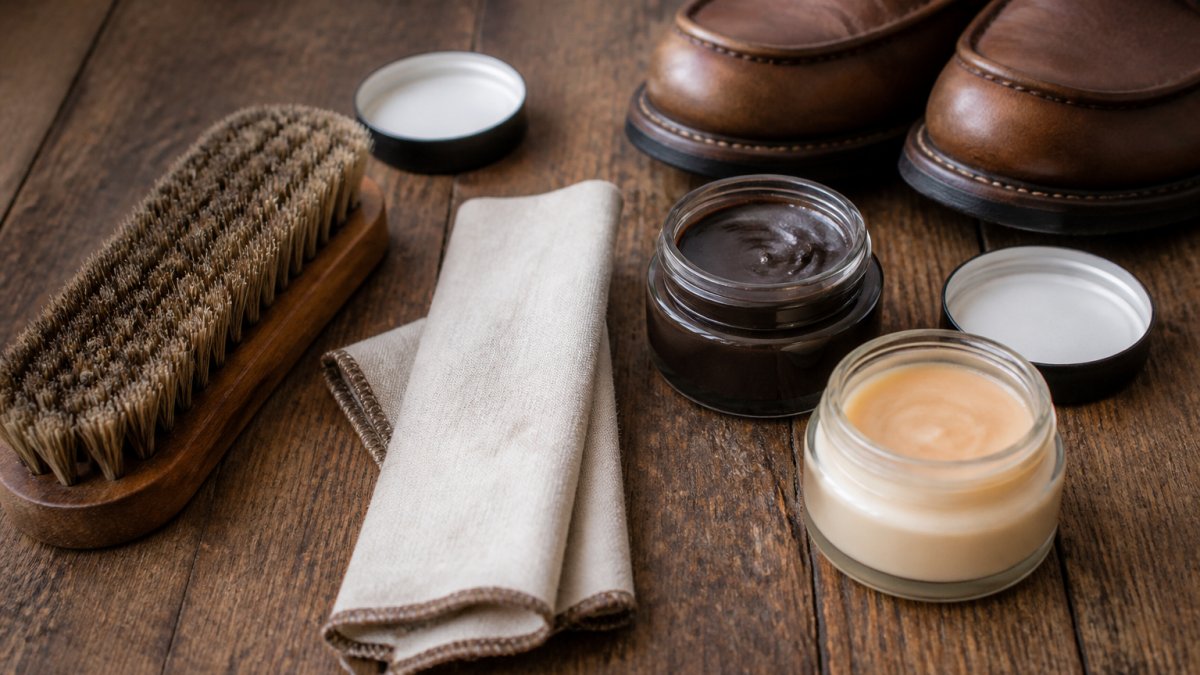
Horsehair brush. Removes surface dust and debris without scratching. Use after every wear.
Soft polishing cloth. Use to apply cream, conditioner, and polish, and to buff the leather to a shine.
Leather conditioner. Keeps leather nourished and prevents drying and cracking. Apply every few months depending on wear.
Shoe cream. Adds color and protection, fills minor scuffs, and keeps the grain looking rich.
Shoe trees. Cedar wood trees absorb moisture and maintain shoe shape between wears, one of the most important tools most people skip.
Quality basics work better than expensive specialty products.
Your Daily and Weekly Maintenance Routine
A five-minute routine after wearing your shoes prevents most problems.
Remove surface dust and debris
After each wear, use a horsehair brush to wipe away dust and dirt from the upper and sole, paying attention to creases and seams. This prevents dirt from settling into the grain and stops abrasive particles from scratching the surface.
Address moisture and water exposure
If your shoes get wet, stuff them with newspaper and replace it every few hours. Leave in a cool, dry place for 24 hours, never use direct heat, which damages leather. Insert cedar shoe trees once dry to absorb residual moisture and maintain shape.
Cleaning Leather Shoes and Removing Salt Stains
Salt stains appear as white or gray marks and damage leather if untreated. Clean with a damp cloth and mild soap, wipe gently, dry immediately, and apply conditioner to restore moisture. Repeat for stubborn residue, patience works better than scrubbing.
How to Remove Scuffs from Leather Shoes
Most scuffs are surface-level and hide effectively with shoe cream. Apply in thin layers with a soft cloth using circular motions, let dry, then buff. For exposed lighter leather, use shade-matched color cream.
Conditioning and Moisturizing Your Leather
Leather needs moisture to stay supple. Without conditioning, it dries and cracks. However, over-conditioning is one of the most common mistakes when you maintain handmade leather shoes.
Understanding Your Leather Type
Check manufacturer documentation if unsure; when in doubt, start with less frequent conditioning and observe the leather's response.
Conditioning Frequency Guidelines
- Regular wear (4-5 days per week): Condition every 3 months
- Moderate wear (2-3 days per week): Condition every 4-6 months
- Light wear (once monthly or less): Condition 1-2 times per year
- Vegetable-tanned leather: Condition 2-3 times per year (these leathers self-protect as they age)
- Dry climates: Increase frequency by one conditioning cycle
- Humid climates: Decrease frequency by one conditioning cycle
How to Apply Conditioner Correctly
Use a soft cloth to apply conditioner in thin, even layers. Work it into the grain with gentle circular motions. Pay special attention to creases where the leather flexes most, these areas lose moisture fastest.
Let the conditioner soak in for 10-15 minutes, then buff away excess with a clean cloth. This step is critical: excess conditioner left on the surface creates a sticky, dust-attracting residue that degrades appearance and can trap moisture against the leather.
Recognizing Over-Conditioning Damage
To fix over-conditioned leather: Stop conditioning immediately. Stuff the shoes with newspaper and leave them in a well-ventilated, dry space for 3-5 days. The newspaper will absorb excess oil. If the problem persists, use a clean cloth to gently wipe the surface with a tiny amount of rubbing alcohol on a corner of the cloth, this removes excess conditioner buildup. Then air dry completely.
Choosing the Right Conditioner
Not all leather conditioners are equal. For handmade leather shoes, a neutral leather cream or conditioner formulated for dress shoes is usually the safest choice, it nourishes without darkening or creating buildup.
Conditioning keeps the leather's grain smooth and prevents the surface from becoming dull or stiff. It's the most important preventive step you can take, but only when done correctly and in moderation.
How Often to Polish Leather Shoes and Buffing Techniques
Polish adds shine and a protective layer. It's different from conditioning. Polish sits on the surface and protects against water and dirt. Conditioner penetrates the leather and nourishes it from within.
(2341-1) Emel brogue Blue Lace Up Classics →
Polish leather shoes every two weeks if you wear them regularly. For occasional wear, polish once a month. Heavy daily wear might need weekly polishing.
Apply paste wax or cream polish with a soft cloth. Work it in with small circular motions. Cover the entire upper evenly. Let it dry for five minutes.
Buff the shoe with a clean cloth using firm, circular motions. This brings out the shine and removes excess polish. A good buff makes the difference between a dull finish and a rich, glossy one.
The buffing step is where most people rush. Take time here. A well-buffed shoe looks expensive and feels good to wear.
Storage, Shoe Trees, and Seasonal Care
How you store shoes between wears matters as much as how you wear them. Proper storage prevents shape loss, moisture damage, and mold. But storage and care strategies must shift with the seasons, winter and summer present entirely different threats to leather.
Year-Round Storage Fundamentals
Insert shoe trees immediately after removing your shoes. Cedar wood trees absorb moisture and maintain the shoe's form. This prevents creasing and keeps the leather from collapsing around the foot area. Cedar also naturally repels insects and odors.
Store shoes in a cool, dry place away from direct sunlight. Sunlight fades leather and causes cracking over time. A closet or shelf works well. Avoid damp basements or hot attics, which create extreme humidity or temperature swings that damage leather.
Rotate between multiple pairs if you can. Wearing the same shoes every day doesn't allow them to dry and recover fully.
Winter Maintenance: Salt, Slush, and Cold
Salt stains and residue: In winter, brush your shoes daily instead of after each wear.
After wearing shoes in salty conditions, wipe them with a barely damp cloth (not soaked) to remove visible salt residue.
Water and slush exposure: Winter shoes will get wet.
Once dry, apply leather conditioner to areas that were wet. Conditioning every 4-6 weeks during winter (instead of every 3 months) replaces lost moisture.
Temperature shock: Moving between freezing outdoor air and heated indoor spaces causes leather to expand and contract rapidly. This stress can cause cracking over time.
Winter storage: Store winter shoes with fresh cedar shoe trees.
Summer Maintenance: Heat, Humidity, and Sweat
Summer presents the opposite challenge: excess moisture from humidity and sweat, combined with heat that can warp leather.
Sweat and moisture absorption: Feet produce sweat year-round, but summer sweat is heavier. After wearing shoes in warm weather, insert cedar shoe trees immediately, they absorb this moisture.
Condition leather every 4-6 weeks in summer (same as winter, but for different reasons). Regular conditioning replaces these oils and prevents the leather from becoming brittle.
Heat damage prevention: Store summer shoes away from direct sunlight and heat sources. A closet is ideal.
Summer polish and shine: Humidity can dull polish faster in summer. If you polish every two weeks year-round, you may need to polish weekly in summer to maintain shine.
Transitional Seasons: Spring and Fall
Spring and fall are lower-stress periods. Maintain your standard routine: brush after wear, condition every 3 months, polish every 2 weeks. However, watch for rapid temperature swings in these seasons. If your region experiences 40°F mornings and 70°F afternoons, allow shoes to acclimate gradually when moving between environments.
Recognizing Seasonal Damage Early
In winter, watch for white salt stains that don't respond to gentle cleaning, this signals salt has penetrated the leather and may require professional restoration. In summer, watch for a musty smell or any color change inside the shoe, these are early signs of mold. Catching these issues early prevents permanent damage.
Frequently Asked Questions
What are the essential tools needed for leather shoe maintenance?
A proper leather shoe cleaning kit essentials should include a horsehair brush for removing surface dust, soft polishing cloths or buffing cloths for shine, leather conditioner to maintain moisture balance, paste wax or shoe cream for protection, and a damp cloth for gentle cleaning. For handmade leather shoes like those from MintMouse, natural bristles are important to avoid damaging the grain. Cedar wood shoe trees help maintain shape and absorb moisture. These tools work together to keep your shoes supple, protected, and looking their best.
How often should I condition my child's handmade leather shoes?
Condition handmade leather shoes every 3-4 months during regular wear, or more frequently in harsh weather. Always check the leather's appearance first; if it looks dry or loses its supple feel, it needs conditioning sooner. Quality handmade leather like that used in MintMouse shoes responds well to regular nourishment.
Can I use household items like Vaseline or dish soap on high-quality leather?
No. Avoid Vaseline, WD-40, and dish soap on handmade leather shoes. Instead, use products specifically designed for leather care: leather conditioner for nourishment and paste wax for protection. For children's shoes, this is especially important since their feet are still developing and you want to preserve the quality and breathability of the leather. Stick to proper leather care products to maintain your investment.
What is the best way to protect handmade leather shoes from water and dirt?
Apply a waterproof protective layer using paste wax or a leather protectant before your child wears new shoes. This creates a barrier against moisture and salt residue without blocking the leather's ability to breathe. After exposure to water or salt, air dry the shoes away from direct heat, stuff them with newspaper to absorb moisture, then condition the leather to restore its moisture balance. Cedar wood shoe trees during storage help prevent water damage and maintain shape. Regular conditioning maintains the protective layer, so reapply every 3-4 months or after heavy exposure.